
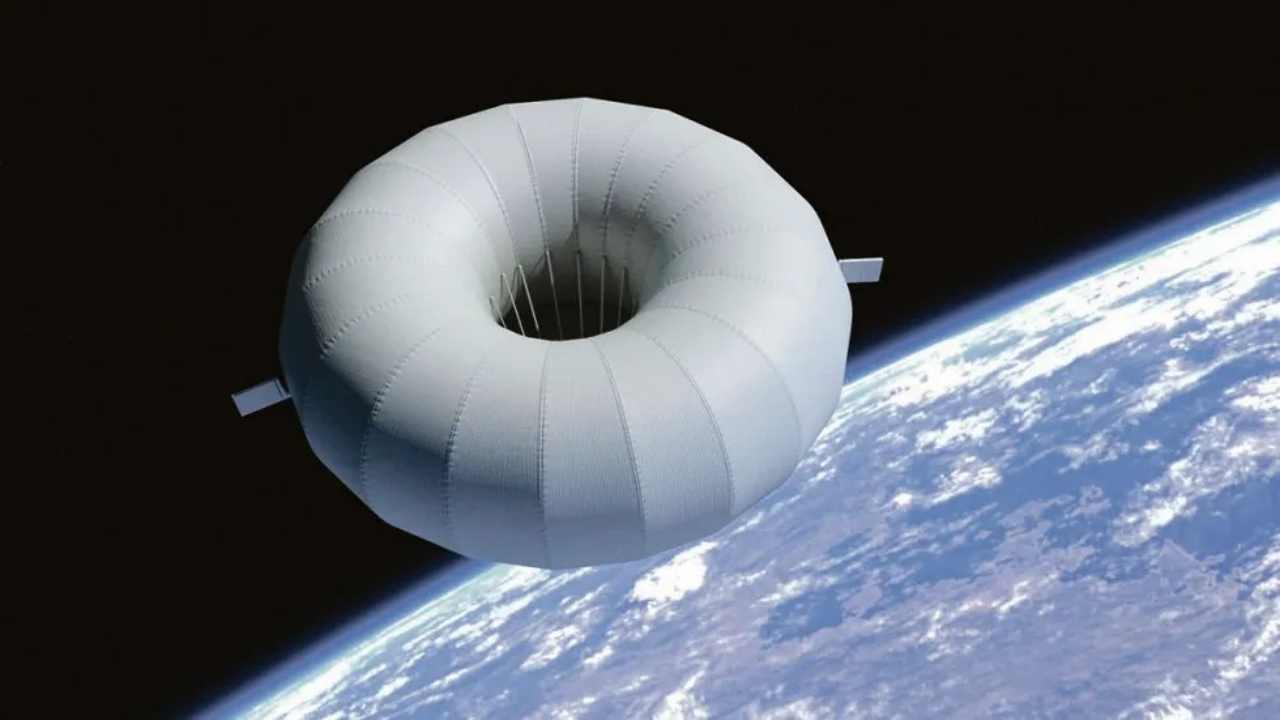
Atmos Space Cargo startup vehicle returns to Earth with valuable data after its first test mission
An astonishing donut-shaped spacecraft, designed to bring valuable cargo back to the planet, successfully completed its inaugural mission.
Atmos Space Cargo described the experiment as a “success” after the capsule with its unusual design landed about 2,000 kilometers off the Brazilian coast.
The vehicle, named Phoenix, is a project of the German startup and was launched on April 21 via the shared Bandwagon-3 mission by SpaceX.
According to the company, the test generated a large amount of relevant data for the development of the technology.
Sebastian Klaus, CEO of Atmos, explained that the mission had three main objectives:
First, to gather information during the flight of the spacecraft itself. Next, to operate and recover data from the payloads on board. Finally, to evaluate the performance of the inflatable heat shield during re-entry into the Earth’s atmosphere.
Klaus stated that the team “gathered a lot of flight data,” highlighting that all four payloads worked as expected and provided important information.
The mission was celebrated as a “total success.” However, the evaluation of the heat shield could not be performed due to an unexpected change in the mission’s schedule.
Originally, the re-entry was planned to occur in the Indian Ocean, near Réunion Island, east of Madagascar.
For six months, the company meticulously prepared the operation in the region, including recovery ships and aircraft to monitor the re-entry.
However, just five weeks before the launch, SpaceX communicated “operational restrictions” that forced a change in the re-entry route — redirecting the spacecraft to an area near the Brazilian coast.
As a result, Atmos had to quickly adjust its plan, including the alignment of new tracking stations in South America and chartering an aircraft to record the re-entry.
Unfortunately, the new location ended up being out of reach of the aircraft sent, and the presence of clouds made it difficult to capture useful images of Phoenix’s return.
Therefore, Klaus assessed that the third objective of the mission was “partially successful” and admitted that it would be “very difficult” to recover the data from the heat shield.
Nevertheless, the executive emphasized that the information gathered will be crucial for the development of the next version of the Phoenix vehicle, with a new test scheduled for next year.
“It would have been much better to have more data about the final critical phase of the flight,” said Klaus.
“But, on the other hand, we learned a lot about all the other systems and operational aspects.”
He concluded by emphasizing that the operation was a “very successful mission.”
Source and images: The Sun / Atmos Space Cargo. This content was created with the help of AI and reviewed by the editorial team.
